Builds · 11 drawings
Built with AI, checked like flight hardware.
RF test tools, hardware, software products and the infrastructure they run on. Each page covers what was built, the decisions that mattered, and exactly how AI agents were used.
Instrument control and analysis tools for the RF lab, built for how RF engineers actually work.
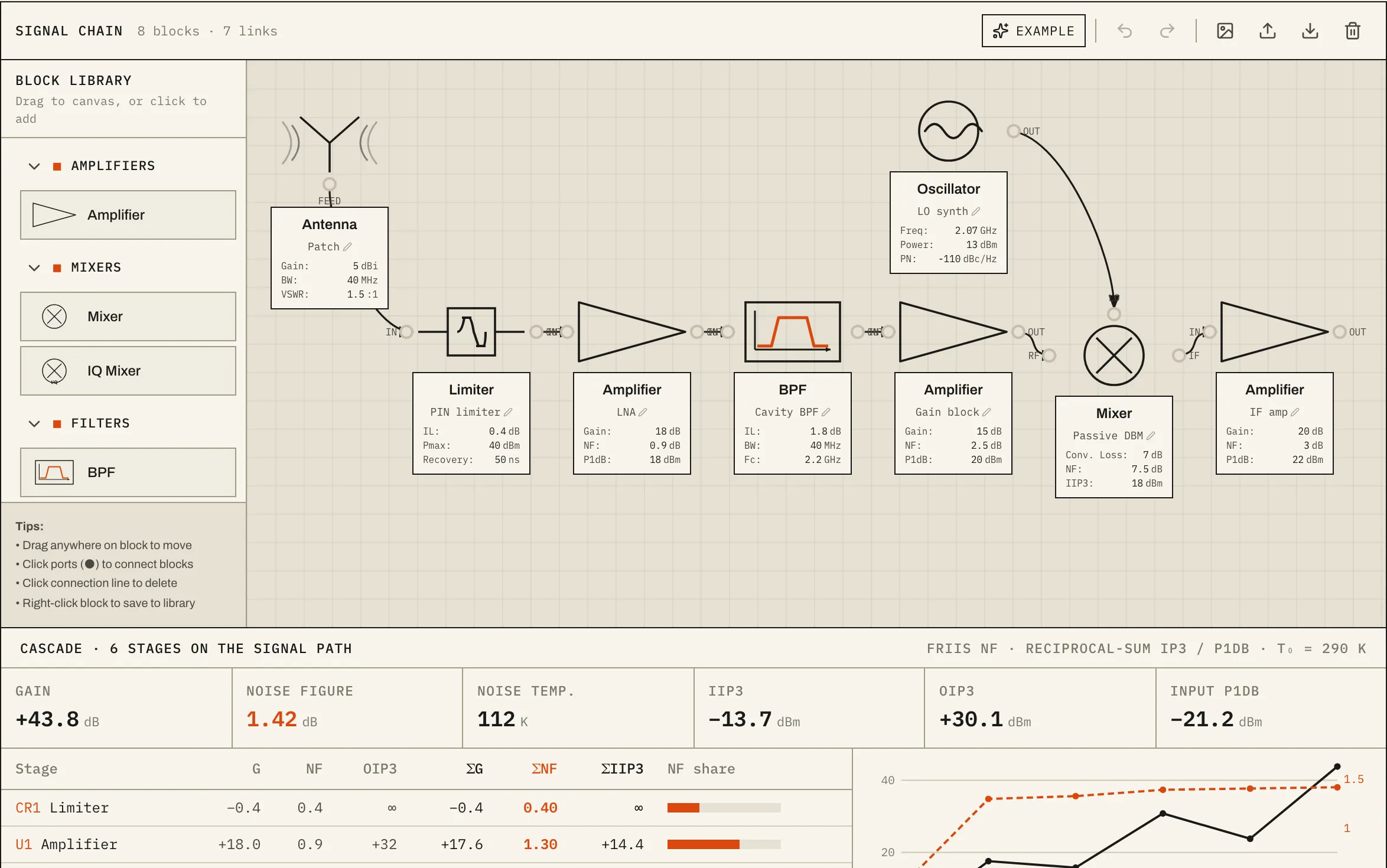
RF Workbench
Browser RF tools on this site. Draw a signal chain and get a live cascade of gain, noise figure, IP3, P1dB and sensitivity; load Touchstone files and compare parts on rectangular or Smith axes. Nothing is uploaded.
- 150
- unit tests on the RF math
- 2 + 1
- parallel agents + me
- 0
- bytes uploaded
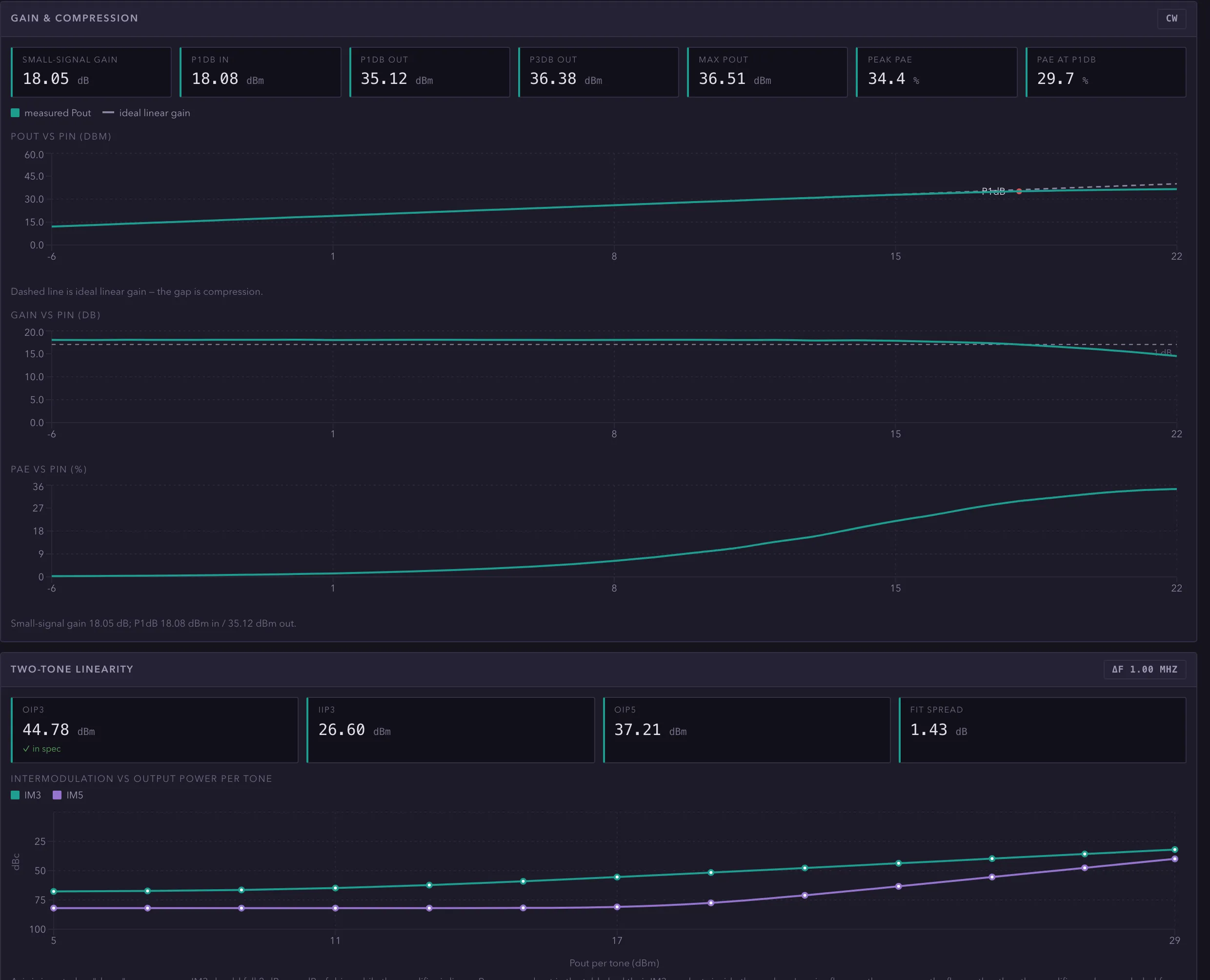
PA Characterization Bench
A browser-driven RF power-amplifier test bench. It runs a vector signal generator, a signal analyzer and a 4-channel supply over raw SCPI, and turns a morning of manual measurements into one button per test.
- 71
- commits in 12 days
- 107
- independent math checks
- 7 → 0
- SCPI errors per sweep after bring-up
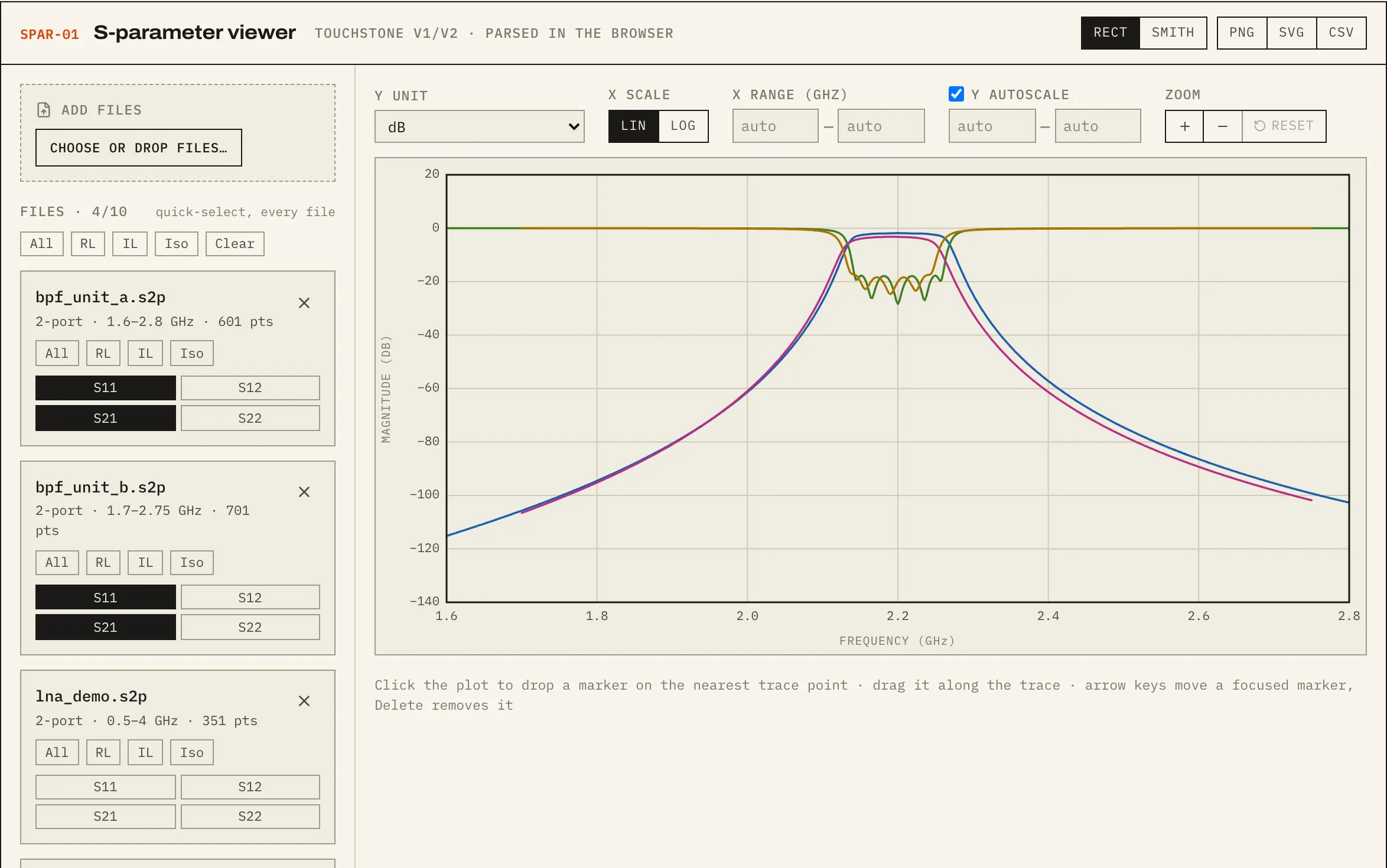
S-Parameter Viewer
A VNA-style Touchstone viewer for comparing parts. Overlay up to ten .sNp files, one-click return loss, insertion loss or isolation, snap-to-point markers, cross-grid trace math, and slide-ready export.
- 1
- day, first commit to deployed
- 10
- files overlaid at once
- N-port
- any port count
Boards and mechanical parts, from mains-rated PCBs to parametric 3D-printed designs.
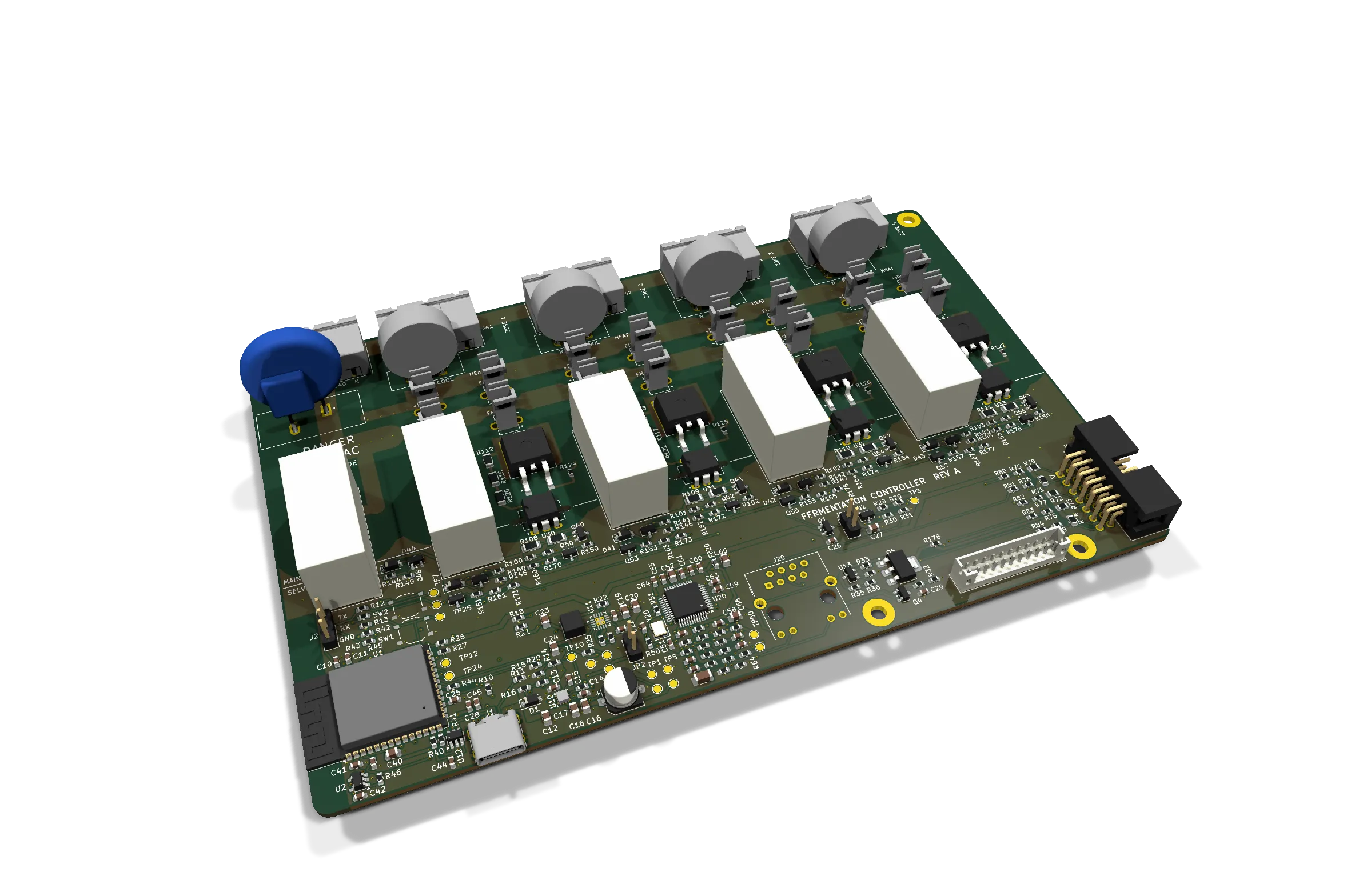
4-Zone Fermentation Controller
A mains-switching brewery controller designed as a real, manufacturable product. ESP32-S3, four triac heater zones and four relay pump zones, 288 parts on a 4-layer board. Taken from written brief to routed PCB in three days, with AI agents driving KiCad.
- 288
- components, 9 schematic sheets
- 43
- logged design decisions
- 0 / 0
- ERC errors / warnings
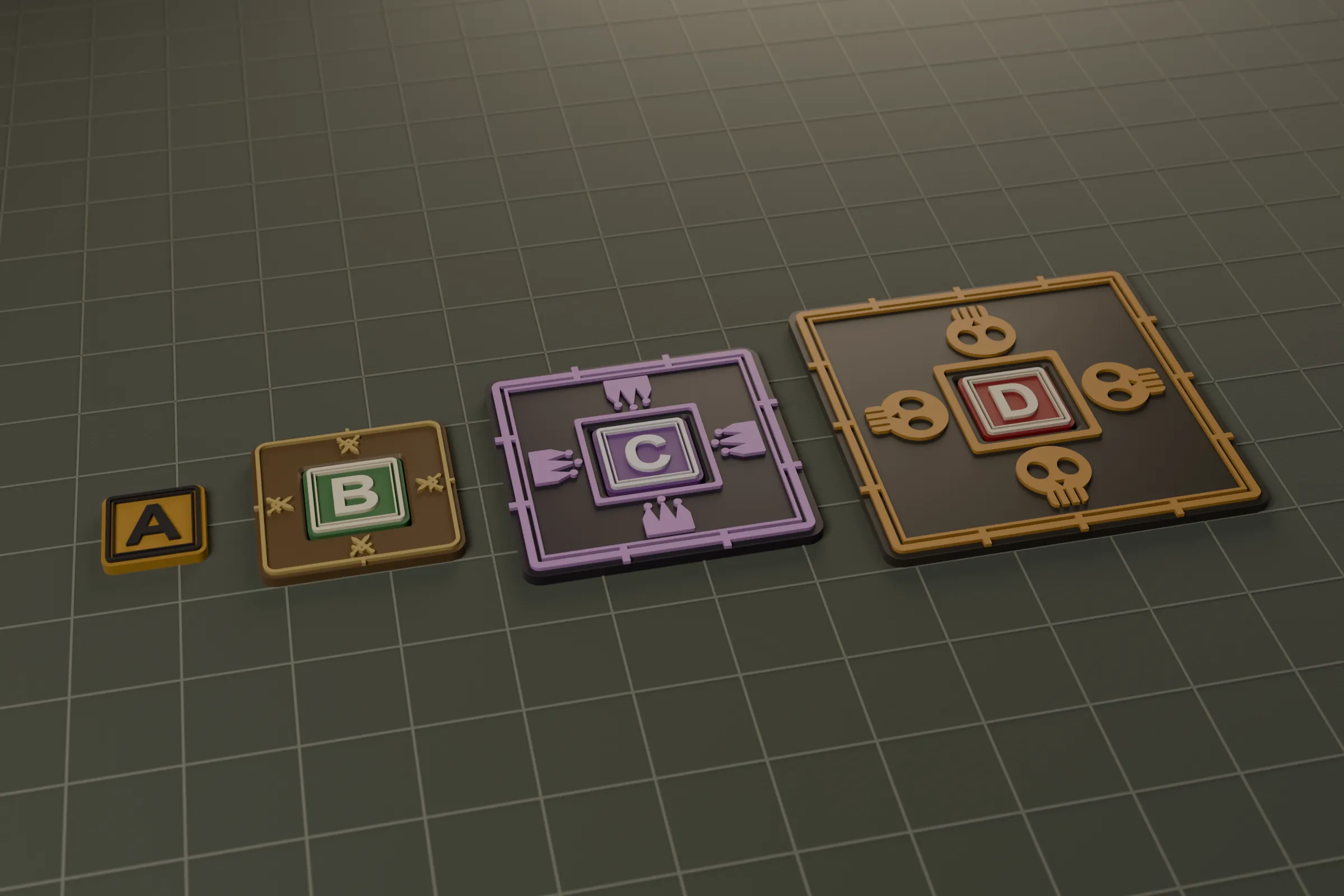
Parametric Tabletop Token System
A fully parametric OpenSCAD system of 3D-printable grid tokens, with 47 base tiles that drop flush into ring frames for Large, Huge and Gargantuan creatures. The build script exports and verifies 191 meshes, and a Blender scene built entirely in code renders the product shots.
- 191
- meshes built and verified
- 47
- tiles fit one print bed
- 4.0
- mm, flush assembly
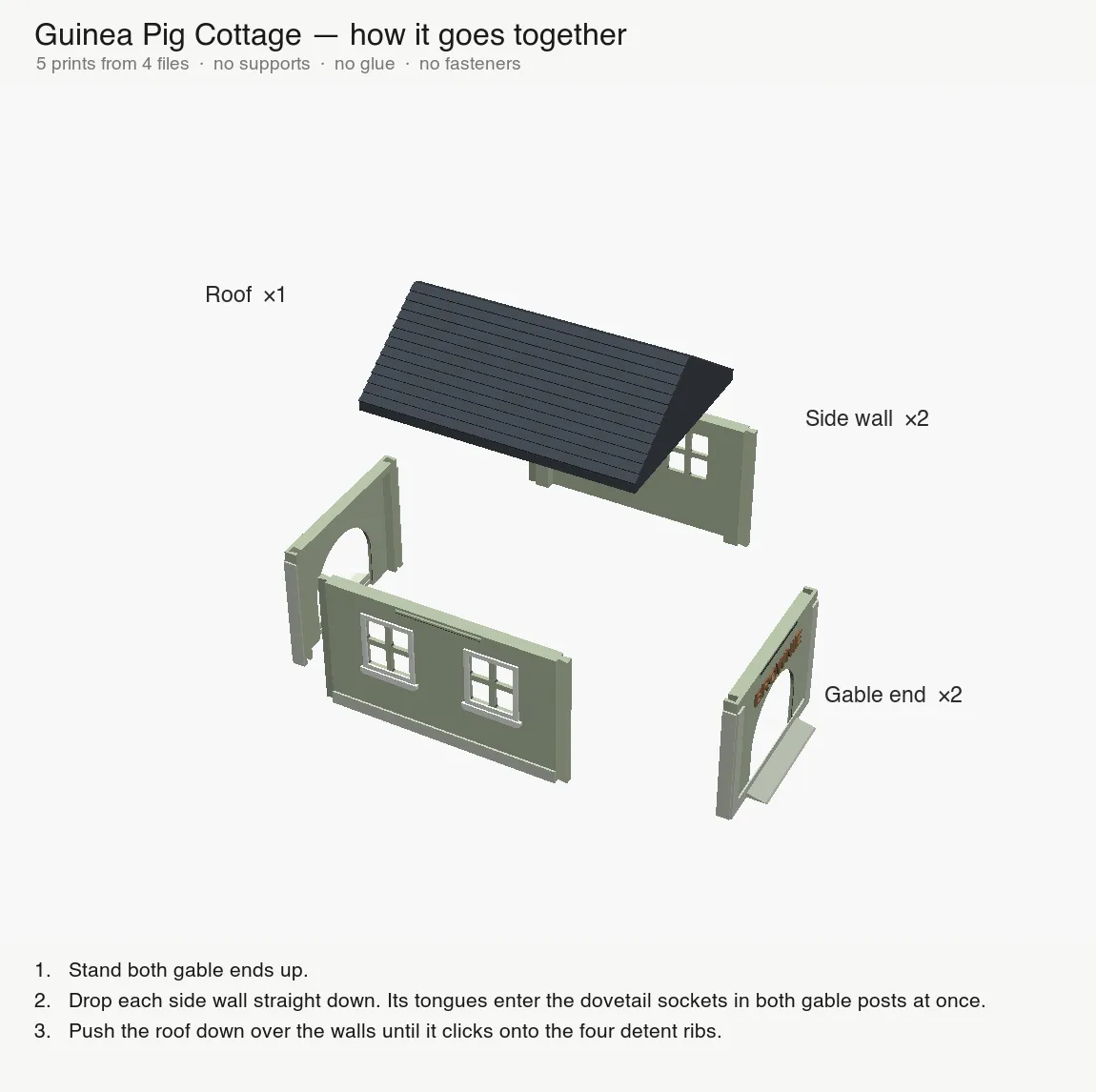
Two-Door Guinea Pig Cottage
A parametric, 3D-printable hideout designed around animal behavior and printability. Five parts, no fasteners, no glue, no supports, and a build script that refuses to package a non-manifold mesh.
- 0
- supports, fasteners or glue
- 1.27
- kg PETG, five prints
- 0.35
- mm dovetail fit
Products in real use: AI vision and voice, invoicing, e-commerce.
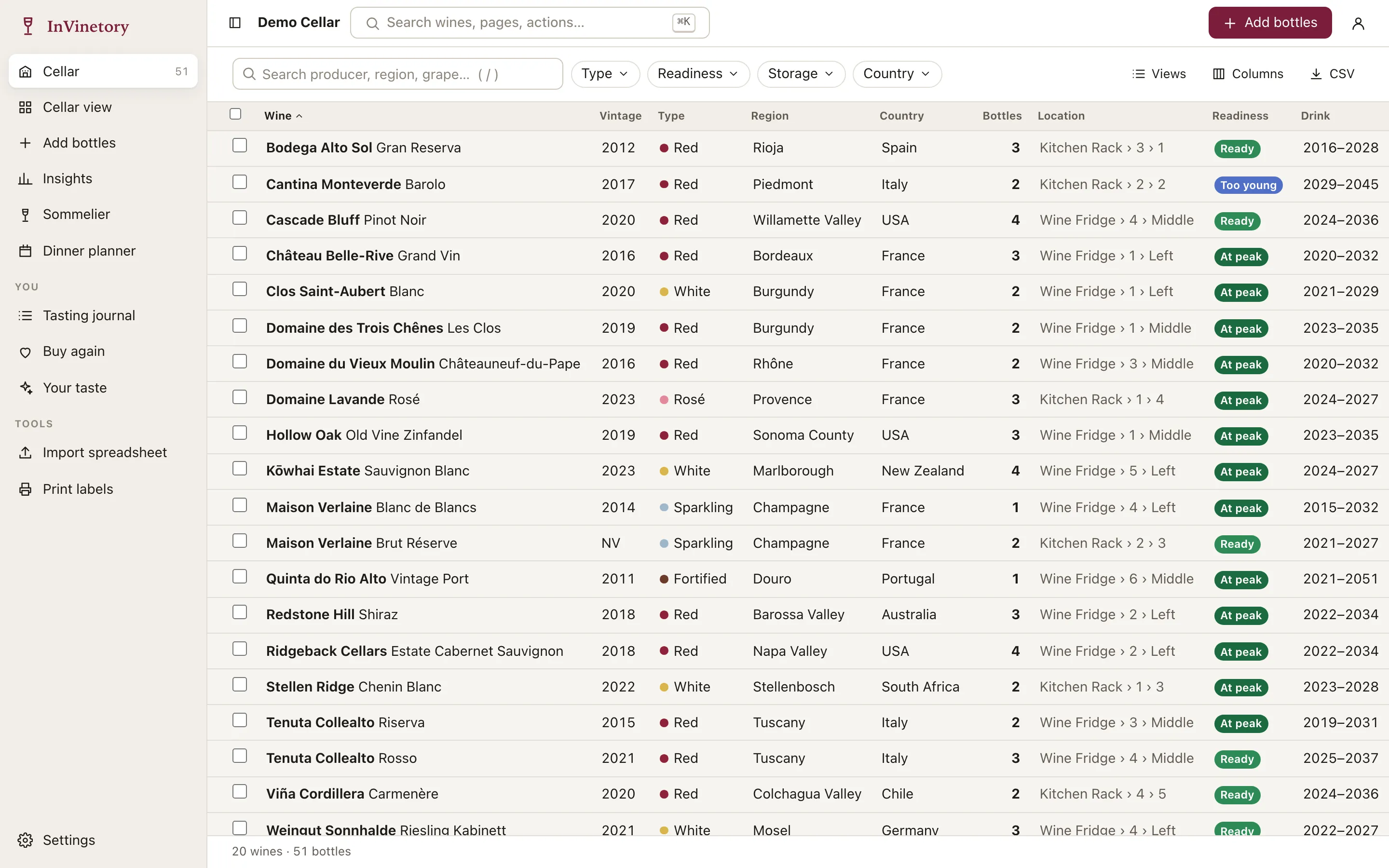
InVinetory
Point a phone at a wine label and it identifies the bottle, researches it once for every cellar, and files it in a shared household inventory. Describe dinner out loud and a voice sommelier picks from bottles you actually own.
- 13/14
- labels right on real photos
- 2.7 s
- median read, ~0.4¢ each
- 2 days
- for all 6 planned phases
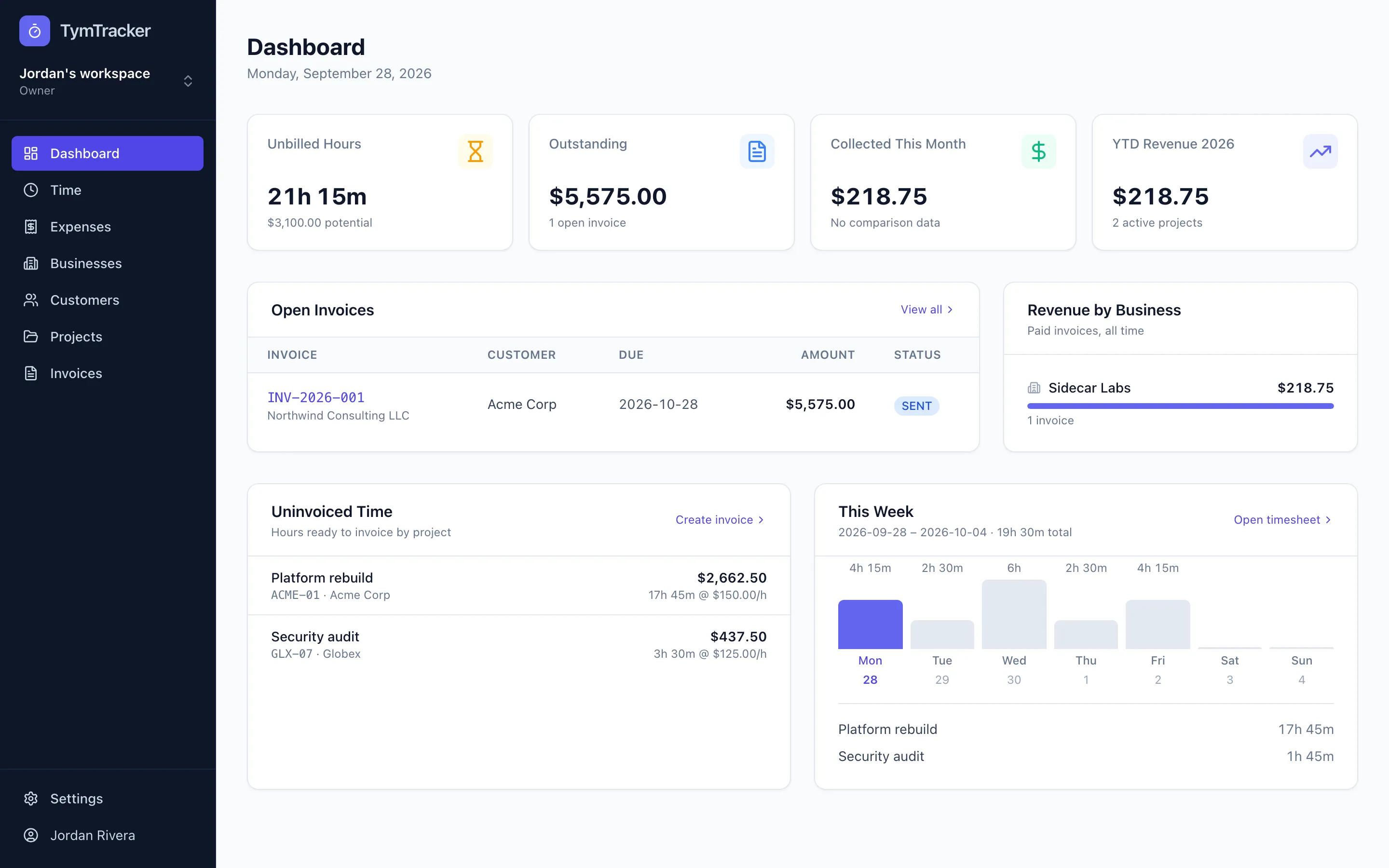
TymTracker
A time-tracking and invoicing app I built when my invoicing tool's price went from about $100 to about $2,000 a year. It runs my own invoicing today, and is being rebuilt as a multi-tenant SaaS product.
- 20×
- price increase avoided
- 40
- tests, incl. auth against Postgres
- 22 → 8
- npm audit advisories
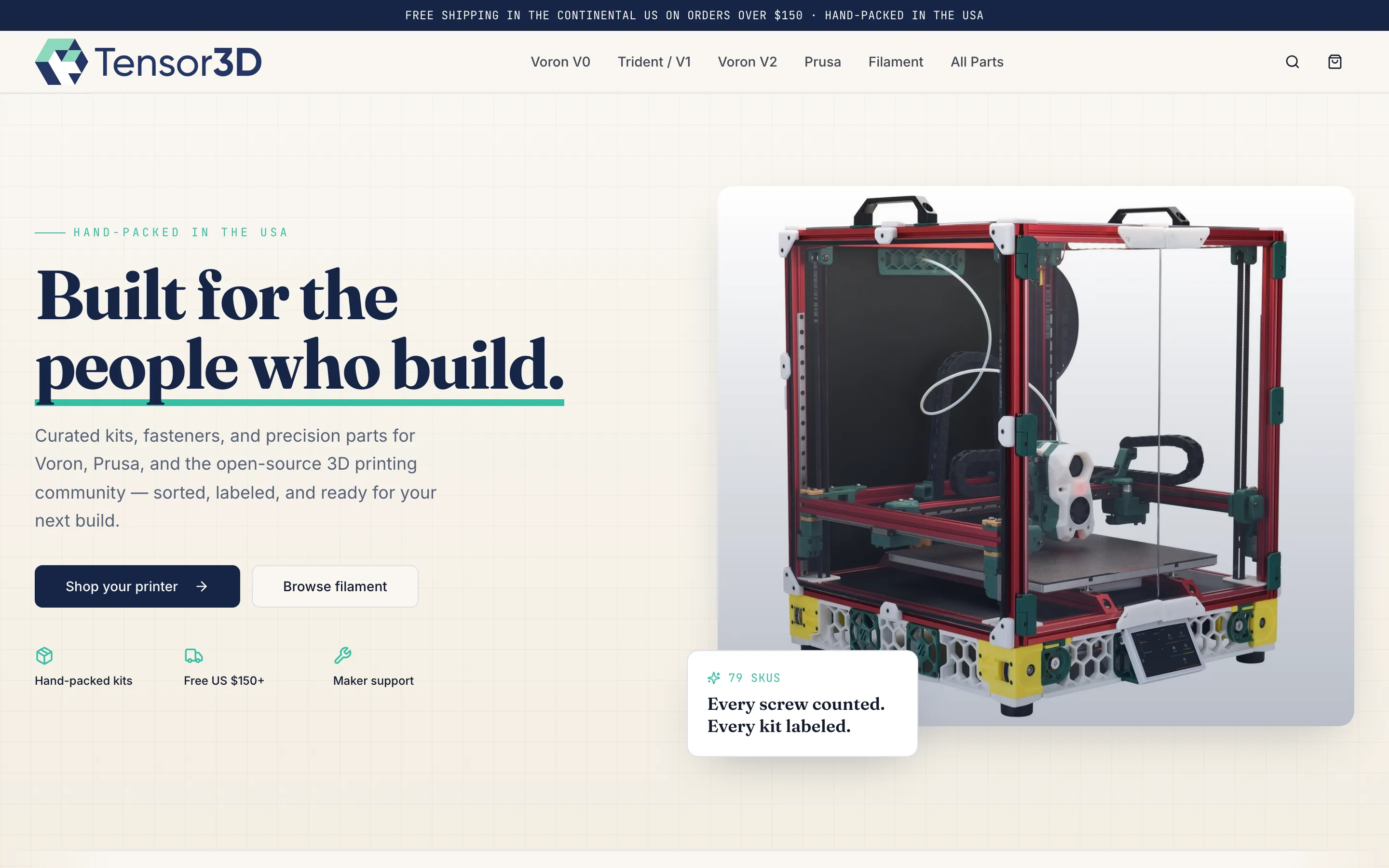
Tensor3D Storefront
A self-hosted e-commerce platform that replaced Shopify for my 3D-printer parts shop. It covers storefront, checkout, oversell protection, shipping labels, admin and analytics, and I migrated in four years of order history.
- 10
- days of build, 32 commits
- 983
- historical orders migrated
- 17 → 0
- audit findings open
The self-hosted platform everything else runs on.
- SW1
10 GbE core
6 VLANs
- N1–N2
Storage nodes
NVMe + dual-path SAS
- N3
Media node
GPU passthrough
- N4–N5
App nodes
my apps + services
- U1
Edge
VPN + tunnel only
The Homelab
A five-node Proxmox cluster with 218 TB of ZFS, a segmented 10 GbE network, and around twenty services. It hosts every app on this site, and it's run as documented infrastructure with an AI agent that keeps the runbook current.
- 5
- cluster nodes, ~20 VMs
- 218 TB
- RAIDZ2, grown in place
- 6
- VLANs, IPS on each
- J1–J8
PoE cameras
RTSP, H.264 / H.265
- U1
go2rtc
WebRTC, no transcode
- U2
Backend
credentials, PTZ, passkeys
- U3
PWA
iPhone home screen
Vordr Camera Viewer
A self-hosted, view-only live viewer for eight PoE cameras that installs on an iPhone home screen. WebRTC with no transcoding, pinch-zoom and PTZ, and private cameras that unlock with a passkey. Nothing leaves the private network.
- 8
- cameras, live
- ~4%
- CPU for 5120×1920 + audio
- 0
- requests leave the network